A strong relationship between the arts and politics particularly between various kinds of art and power.
Tuesday, 13 December 2016

Modern Masters
The British edition of Vogue is a fashion magazine that has been published since the autumn of 1916. The magazine's current editor stated that, “Vogue’s power is universally acknowledged. It’s the place everybody wants to be if they want to be in the world of fashion" and 85% of the magazine’s readers agree that “Vogue is the Fashion Bible”.

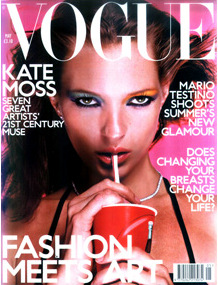
The magazine is considered to be one that links fashion to high society and class, teaching its readers how to ‘assume a distinctively chic and modern appearance’. As a branch-off of American Vogue, British Vogue is a magazine whose success is based upon its advertising rather than its sales revenue.

British Vogue’s current editor-in-chief is Alexandra Shulman, who took the reins in 1992. During her time as editor, the magazine has drawn more than a million readers. Shulman is especially known for developing collector’s issues of British Vogue, such as the ‘Gold Millennium Issue’ where celebrities and supermodels such as Kate Moss can be found on the cover. Shulman is also praised for her use of up and coming photographers like Mario Testino.
 The editor has also become known for her attempt to change the face of fashion. She has pushed designers to stop using 'size-zero' models. Shulman stated that "super-skinny models are no longer acceptable," receiving positive notes from women all over the world. Today, British Vogue has become quite modernised
Vogue History

During the First World War, Conde Nast, Vogue’s publisher, had to deal with restrictions on overseas shipping as well as paper shortages in America. The British edition of Vogue was the answer to this problem, providing Vogue fashion coverage in the British Isles when it was not practicable to receive it in the usual way. Under the London edition's first editor, Elspeth Champcommunal, the magazine was essentially the same as the American edition, except for its British English spellings. However, Champcommunal thought it important that Vogue be more than a fashion magazine.

Under its second editor, Dorothy Todd, a renowned Vogue editor due to her boldness, especially in her movement to blend the arts and fashion, the magazine shifted its focus from fashion to literature, featuring articles from Clive Bell about art exhibitions in Paris. There were also notable features from noted English writers such as Virginia Woolf and Aldous Huxley. Due to Todd's changes, the magazine lost much of its audience, and she spent only two years as editor. BritishVogue is not believed to have really taken off until after its third editor, Alison Settlex was appointed in 1926.

Under Audrey Withers (editor from 1940 to 1960), the magazine again took a literary direction, and during the Second World War it even took part in reporting the war. In 1944, the American photographer Lee Miller persuaded Withers to send her to Normandy to produce an article on wartime nursing; Miller then followed the Allied advance through Europe, reporting the liberation of Paris and sending a story from Buchenwald.
Vogue Photographer's

The photographers who bring fashion to life in the pages of Vogue are as influential in the fashion industry as the designers themselves. Patrick Demarchelier has been photographing the world's most beautiful women for Vogue for over 30 years.
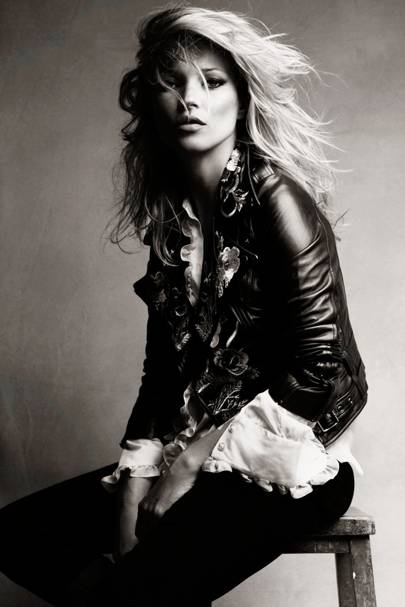
As one of the magazine's most prolific cover photographers, he has photographed models, actresses, singers and even royalty - the latter thanks to his role as Diana, Princess of Wales's personal photographer.
Legends like Richard Avedon, Guy Bourdin, Helmut Newton, and Irving Penn paved the way for the greats of today, challenging the fashion world to accept new ideas of sexiness, femininity, and masculinity. Most of the photographers on this list admit to or demonstrate being inspired by them in some way.
1950's Vogue Cover

This is the image I am redoing in a modern way.

Erwin was a photographer and artist born in Germany. He was best known for his fashion photography published in Vogue and Harper's Baraar in the 1940's and 1950's.
Tuesday, 6 December 2016
Photography and Film
Many artists documented the conceptual practice as an artefact to the event using the new form of art photography. This later in the 60's moves in film and now in the digital world.

Tuesday, 8 November 2016
Love and Art
Mothers Love
Mary Kelly


Mary Kelly
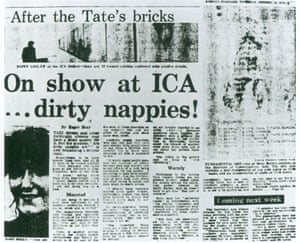
When she started out, just getting heard required a shock to the system. In the mid-70s, her installation at the ICA, Post-Partum Document, analysed her newborn son’s development, their emotional bond, his early attempts at writing – and framed and hung his stained nappies on the gallery walls. “On display at the ICA … dirty nappies!” ran the Standard’s outraged headline.
For the love of god
-Damien Hirst
‘For the Love of God’, a platinum skull set with diamonds, is one of Hirst’s most important and widely recognised works. Its raw materials define it as an artwork of unprecedented scale. The 32 platinum plates making up ‘For the Love of God’ are set with 8,601 VVS to flawless pavé-set diamonds, weighing a massive 1,106.18 carats. The teeth inserted into the jaw are real and belong to the original skull.
‘For the Love of God’ acts as a reminder that our existence on earth is transient. Hirst combined the imagery of classic memento mori with inspiration drawn from Aztec skulls and the Mexican love of decoration and attitude towards death. He explains of death: “You don’t like it, so you disguise it or you decorate it to make it look like something bearable – to such an extent that it becomes something else.
Feminism and Art

Feminist art is art by women artists made consciously in the light of developments in feminist art theory in the early 1970's.
The feminist art movement emerged in the late 1960's amidst the fervor of anti-war demonstration as well as civil and queer right movements. Hearkening back to the utopian ideals of early twentieth-century modernist movements.
Feminist artists sought to change the world around them through their art, focusing on intervening in the established art world, the art historical canon, as well as everyday social interactions.
As artist Suzanna Lacy declared, the goal of Feminist art was to "influence cultural attitudes and transform stereotypes." There is no singular medium or style that unites Feminist artists, as they often combined aspects from various movements and media, including Conceptual art, Body art, and video art into works that presented a message about women's experience and the need for gender equality.
Feminist art created opportunities and spaces that previously did not exist for women and minority artists, as well as paved the path for the identity art and activist art of the 1980's.
Mary Kelly

Mary Kelly is known for her project-based work, addressing questions of sexuality, identity and historical memory in the form of large-scale narrative installations. She studied painting in Florence, Italy, in the sixties, and then taught art in Beirut, Lebanon during a time of intense cultural activity known as the “golden age.”

In the 1970s, she pinned dirty nappies to a gallery wall. Today, Mary Kelly spins war memorials from mountains of tumble-dryer lint. At her home in Bel Air, the feminist pioneer reveals 40 years of shock tactics.
Linda Sterling
Linda is a visual artist who creates photomontages. Taking one image as base image and adding another/part of another photo even an object on top to hide a key part off image underneath.
Linda's artistic work is very media related and was mainly vex.

Cindy Sherman
She studied at Buffalo State College, concentrating on photography, which she maintained is the appropriate medium of expression in our media dominated civilisation. Her photographs are portraits of herself in various scenarios that parody stereotypes of woman. A panoply of characters and settings is drawn from sources of popular culture: old movies, television soaps and pulp magazines. Sherman rapidly rose to celebrity status in the international art world during the early 1980's with the presentation of a series of untiled 'film stills' in various group and solo exhibitions across America and Europe.

Tuesday, 4 October 2016
Contemporary Practice
Mary Stark
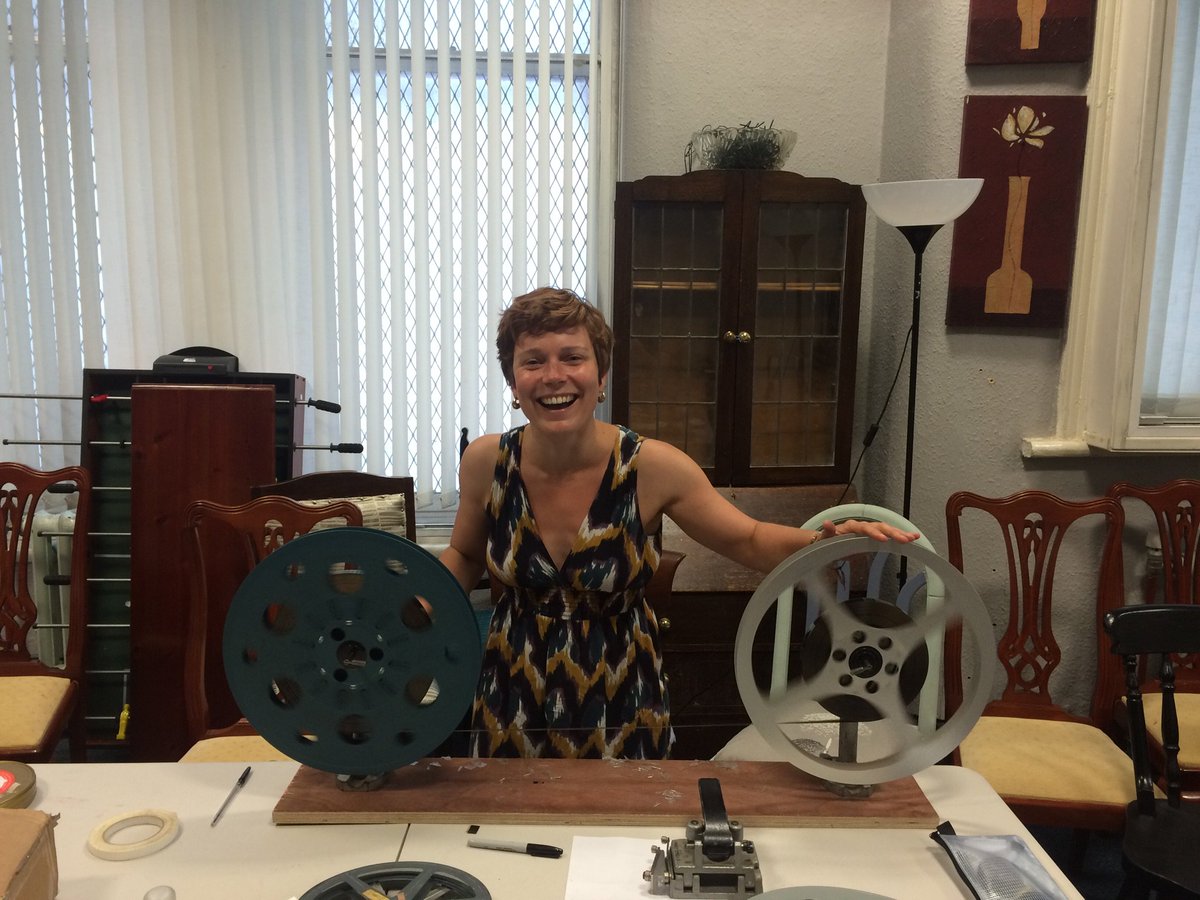
Mary Stark is an artist filmmaker with a background in textile practice based at Rogue Studios, Manchester. Since 2012 Mary has been making 16mm film performances exploring optical sound created from fabric and stitch patterns. The filmmaking technology of optical sound involves visual forms in the soundtrack area of the filmstrip transforming into noise through film projection. Mary's performances summon absent voices and obsolete industries, involving 16mm film projection, light and shadow, mechanical noise and music associated with textile production.

Mary Stark is an artist filmmaker with a background in textile practice based at Rogue Studios, Manchester. Since 2012 Mary has been making 16mm film performances exploring optical sound created from fabric and stitch patterns. The filmmaking technology of optical sound involves visual forms in the soundtrack area of the filmstrip transforming into noise through film projection. Mary's performances summon absent voices and obsolete industries, involving 16mm film projection, light and shadow, mechanical noise and music associated with textile production.
Wednesday, 7 September 2016
Conceptual Art
The term conceptual art came into use in the late 1960's to describe artworks in which the concept behind the artwork is more important than traditional aesthetic and material concerns.


Conceptual artists do not set out to make a painting or a sculpture and then fit their ideas to that existing form. Instead they think beyond the limits of those traditional media, and then work out their concept or idea in whatever material form is appropriate.
There are 5 types of conceptual art;
- Land Art
- Performance
- Photography and film
- Arte Povera
- Found object
 Land Art
Was usually documented in artworks using photographs and maps which the artist could exhibit in a gallery. Land artists also made land art in the gallery by bringing in material from landscape and using it to create.

Robert Smithson is most well-known for his provocative earthwork, Spiral Jetty, made in 1970. He gained international recognition for his groundbreaking art which was not limited by genre or materials as well as his critical writings that challenged traditional categories of art between the years of 1964-1973. His art and writings have had a profound impact on sculpture and art theory for over 30 years.


Another conceptual artist is Andy Goldsworthy
 Goldsworthy regards his creations as transient or ephemeral. He photgraphs each piece once right after he makes it. His goal is to understand nature by direcly participating in mature as intimately as he can. He generally works with whatever comes too hand: twigs, leaves, stones, snow, ice, reeds and thorns.

Performance
It origins begin in "Dada" and "futurism" with Salvador Dale and Marcel Duohamp.
It influence later inspired the likes of Jackson Pollock and the "abstract expressionists.

Subscribe to:
Posts (Atom)